
Reyad Abedin Explores: What is Home?
February 26, 2026
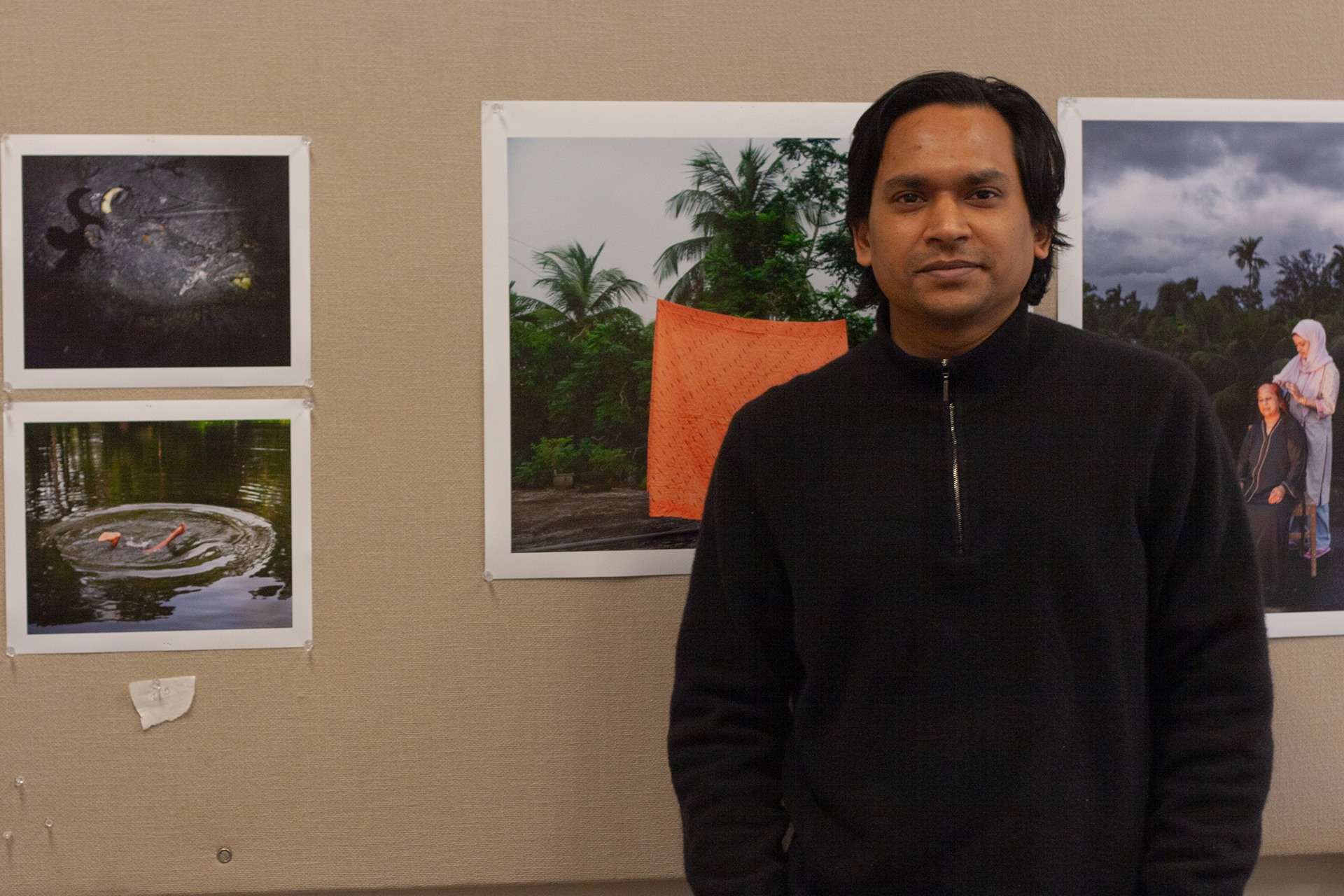
Reyad Abedin sits at the desk in his studio. Photographic prints decorate the walls, lively portraits and colorful landscapes. A variety of cameras, books and writing utensils are scattered around the desk’s surface. This studio and these photographs represent Abedin. They’re a safe space in a place that doesn’t feel quite like home.
“What is actually a home? I am living here. But why am I feeling that I belong somewhere else?” Abedin said.
31-year-old Abedin is a graduate student of photography at Syracuse University from Bangladesh. His project Alien reflects on his complicated feelings about his identity after immigrating to the United States and the dangers that come with it. The project will be displayed in April as part of a graduate student exhibition.
Abedin grew up in Noakhali, Bangladesh, a district in the southeastern part of the country. He was close to his older sister and she introduced him to artistic ideas, taking him to art exhibits and theater performances. Abedin said that her interest in art, magazines and literature inspired him to think creatively at an early age.
For his undergraduate degree, Abedin traveled to the capital city of Dhaka to study fashion merchandising, a lucrative job there because of the successful garment export industry. Though he wanted to study film, this decision was more realistic in cost and a way for him to be creative, but still appease his family and community, Abedin said.
“Art is not something people think about as a mainstream profession in my country as it is very much in a developing stage now. The parents want something for their kids so that they can have a very sure money-making career,” Abedin said.
In his first year at university, Abedin took an introductory photography course that opened his eyes to the medium. Abedin said that it “changed everything” and made him realize that photography was his passion.
After his graduation, Abedin began traveling around Noakhali and the surrounding areas, taking documentary photos of the people in his community. He worked to form relationships with his subjects so that he could accurately depict and capture their personalities and showcase the liveliness of his home.
“I share my life. I share my work, what I have done, and talk about how I think of their community and land and my family story,” Abedin said.
After continuing to work on his photography in Bangladesh, Abedin traveled to the U.S. to be a graduate student of Art Photography at Syracuse University. The new environment was a big change, Abedin said. He struggled with the individualistic nature of the country which greatly contrasted with the familial community of his hometown. He questioned his belonging in this new setting.
“I felt that my identity came before me. Some people have some sort of idea of what a brown South Asian could look like, what their personality is. They had all these ideas before they met me,” Abedin said.
As he dove deeper into his photography education, Abedin started working on a project titled Alien. It became a series of self portraits and landscapes that depicted Abedin interacting with his new environment in Syracuse. These photographs were an exploration of Abedin’s personal identity and they challenged the notions of the U.S. Abedin was taught.
“People of where I am from, we have this very stereotypical idea of fast-traveling countries. It's like everything is made out of gold in the Western world. Everything is so nice. Everything is so beautiful. And we just have to be there at any cost of my life,” Abedin said. “I was trying to question that and explore those ideas, how people construct identity in foreign land between the diaspora identity.”
Romita Ray is an Art History professor at SU. She served as a mentor throughout Reyad’s artistic process, informing him on the historical aspects of his work and providing him with support in his tumultuous time, Ray said.
“If you look at the entire body of photo like any other visual media, it's a way of also constructing history,” Ray said. “(Reyad’s) medium is the camera. It is also declaring a certain kind of history of its own.”
Abedin said that he is aware of the dangers of being an immigrant in the current political climate and is strongly against any discrimination. He said that though he is not an overt advocate, he uses his work to make statements and believes that it will make a difference.
“I think that an artist's responsibility is to question what is going on in the society, not to directly participate in it as a political activist, rather question the system or make an uncomfortable situation for the system so that they can act on something,” Abedin said.
The SU Art Museum’s Newest Exhibition Challenges the Legacy of the Thirteenth Amendment
February 10, 2026
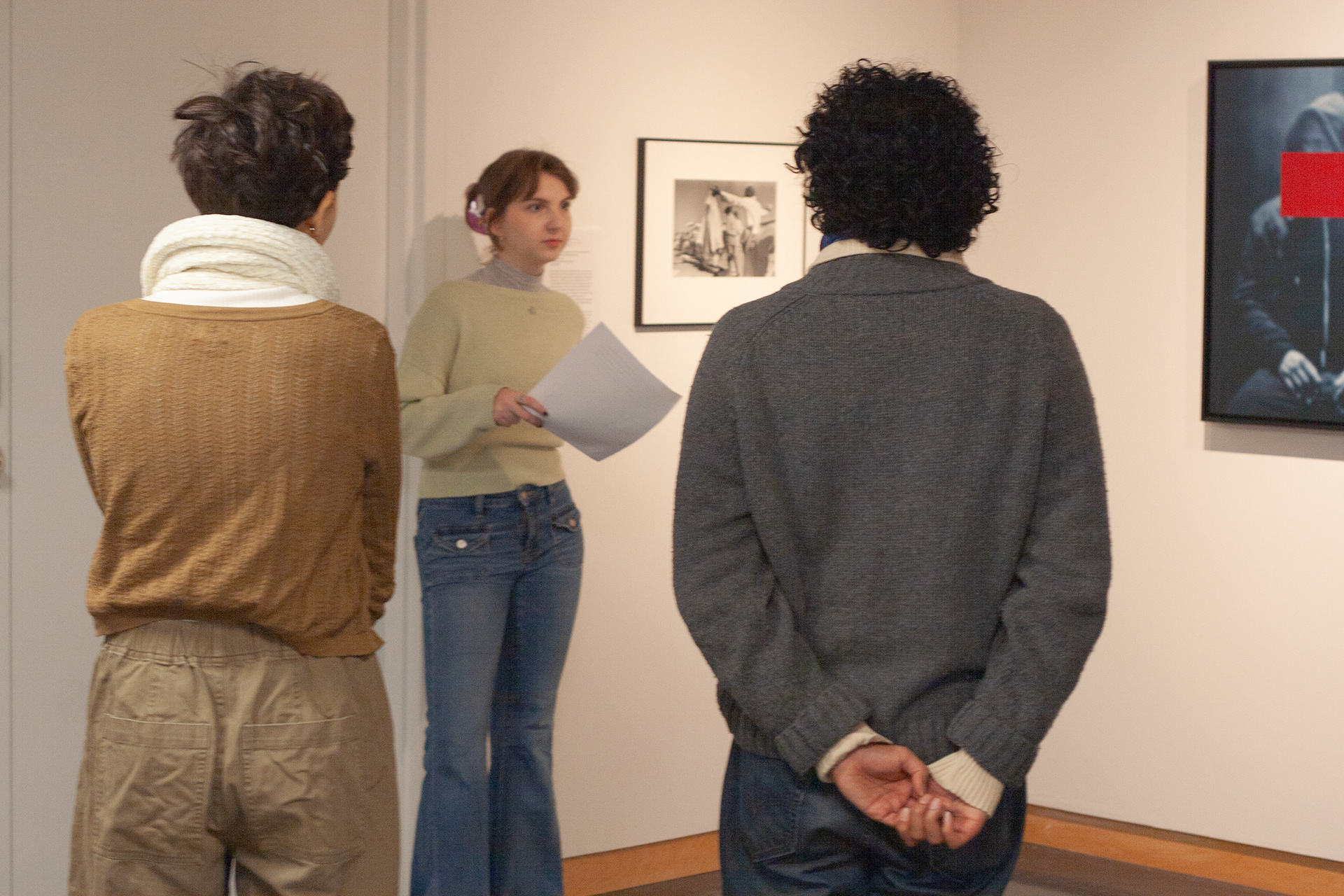
A portrait of Frederick Douglas decorates the wall, the background painted with vibrant blues and greens. Beside it is a linoleum print of an elderly enslaved woman holding a walking stick. On the opposite wall is a dramatic charcoal portrait of Martin Luther King Jr., his expression strong and intense. Around the corner, a yellow poster with thick black lettering reads “Black Lives Matter.” Right above it hangs a photograph of a young black man, his fist raised defiantly to the camera. Above these artworks reside the words: Afterimages: Legacies of the Thirteenth Amendment.
On display at the Syracuse University Art Museum from January 20 to March 8, the exhibition Afterimages: Legacies of the Thirteenth Amendment visually explores the constitutional amendment that abolished slavery in the United States. The exhibition was designed by graduate students at the university taking Associate Professor Sascha Scott’s art history course. The students were assigned an overarching theme: the Thirteenth Amendment and its impact throughout American history. They selected artworks and historical artifacts from the university’s collection and worked with a curator to stage the final exhibition.
Scott chose to focus on the Thirteenth Amendment as the 250th anniversary of the Declaration of Independence approaches. The goal was to highlight the privileges that the Black community is often left out of and how this history relates to the amendment.
“I thought we should think about freedom and who gets it,” said Scott, “We wanted to think about the traumas of slavery and the Thirteenth, but we also wanted to make sure we highlighted resistance, resilience, and continuity. So it's not like this passive story, but Black Americans played a real role in shaping their own attainment of civil rights”
The exhibition begins before the Thirteenth Amendment with themes of slavery and abolition and continues chronologically with themes relating to the emancipation proclamation, the Civil War, Confederacy, debt bondage and sharecropping, black spirituality, the Civil Rights Movement, and contemporary protest movements. The graduate students chose these themes and which they wanted to focus their individual research on.
Graduate student Gabrielle Patrone said that looking at history through an artistic lens makes the information more personal. It gives voices to the Black community who experienced these historical events.
“We kind of traced different time periods, tracking how art has changed over that time and how artists have interpreted the different themes from slavery and abolitionism to the carceral state and everything in between,” said Patrone “It's nice to be able to see different perspectives, especially from artists of color being represented.”
Graduate student Elise Provident chose to focus her research on contemporary artworks that cover institutionalized racism, anti-Black violence, mass incarceration, and the history of the prison system. She researched and wrote about how these topics stem from the Thirteenth Amendment, specifically the Exception Clause which allows slavery as punishment for crime. She said that her work helped her put the amendment into a modern context.
“It is still relevant today. A lot of people think that because it's been over 150 years since abolition, that there's not consequences anymore. But really, it's written into our constitution. And I think it's important if we're going to be celebrating the 250th anniversary of the United States that we really look at what our constitution says and view it critically. The Thirteenth Amendment was a wonderful thing, but it also has its limitations,” said Provident.
Scott said that the exhibition's theme is especially important in the current social climate.
“I think it took an act of courage for the students to be so excited about curating an exhibition on slavery right now,” said Scott, “There's a lot of historical forces that have led to really serious contemporary issues. I think that's really important to talk about right now. It's important to be at a university museum that encourages a difficult exhibition about a difficult history.”
Provident said that the exhibition is not just a look at the past, but a motivator to work for a better future.
“It shows that we can make substantial changes, even if there are unintended consequences or if we are still fighting battles against institutional racism, " said Provident, “As a country, we must continue to grow and evolve. And that's why the constitution is the way it is so we can continue growing and evolving.”
Art as Resistance: How Creators Are Responding to ICE Enforcement
March 25, 2026
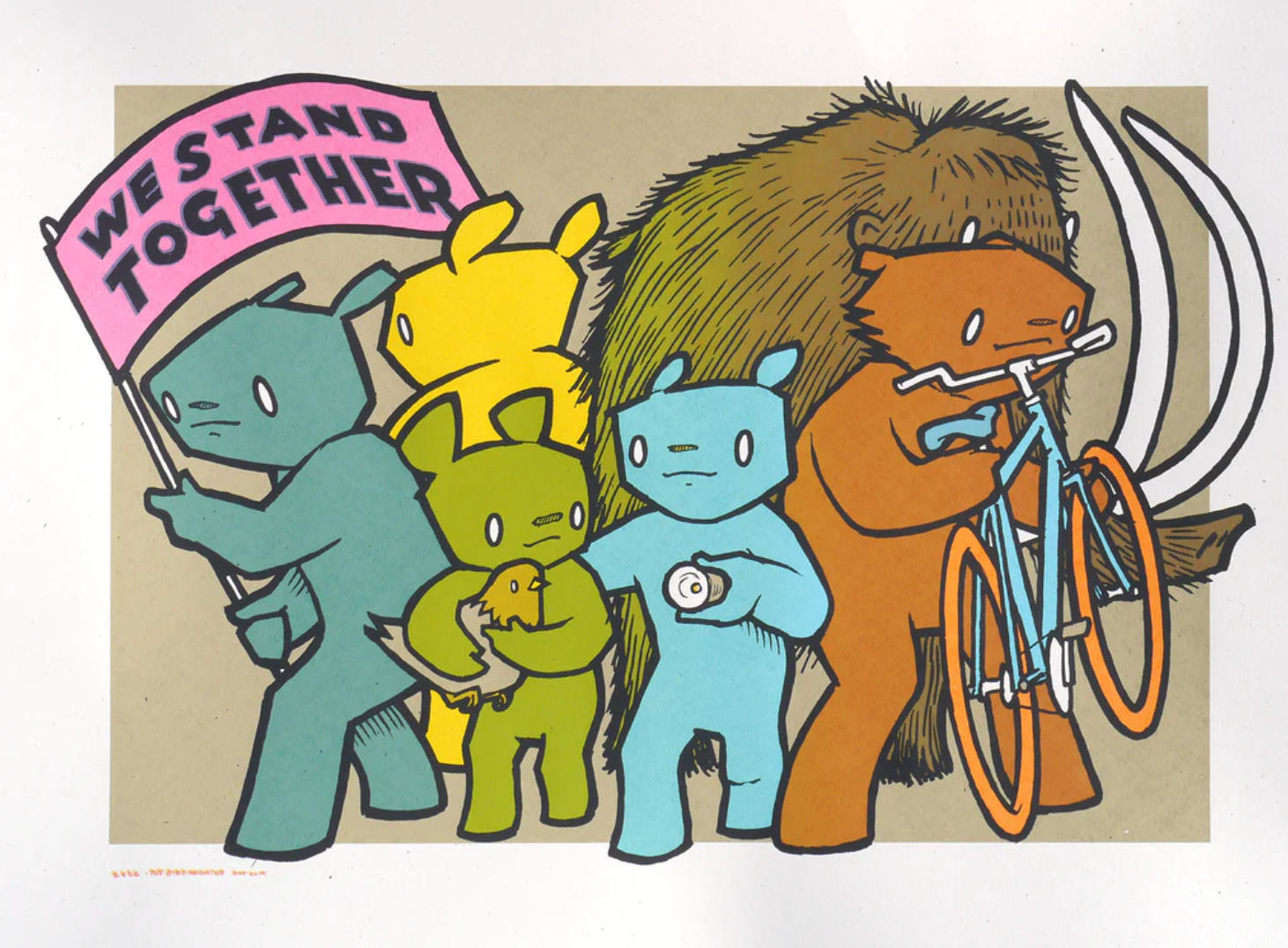
"We Stand Together" by Jay Ryan
Under president Trump’s immigration policies, the United States has seen a drastic increase in Immigration and Customs Enforcement presence nationally. Detainments have spiked as well as resulting protests and unrest. As a reaction to these events, artists have used their work for advocacy against ICE in the form of posters, protest signs, social media posts, and more.
What is the history of art and advocacy?
Samuel Johnson, an Associate Professor of Art History at Syracuse University, said that art has been used consistently throughout history as a tool for people to stand up for what they believe in.
“You can go back to the Baroque period and the Flemish painter Peter Paul Rubens, also worked as a diplomat, and he used his paintings to campaign for peace. So that's a very long history. There are people out there who argue that art is always political and that perspective is one of the reasons that you do see so much activist art in the 20th and 21st centuries,” Johnson said.
What elements make activist art powerful and effective?
Johnson said that art is a powerful tool to make people feel and artists are thoughtful about the imagery in their works and how they are representing their ideas. Sometimes, they use techniques to make their messages hit harder and choose visuals that will garner a strong reaction and get the attention of the public.
“Agitational imagery has most often been employed both in the past and the present. We see tons and tons of this imagery, especially on social media. Something that stops you in your tracks, makes you feel this kind of visceral emotion,” Johnson said.
Bridget Stern is a representative from the Syracuse Immigrant Refugee Defense Network, a volunteer group that supports newcomers to the country through detention support, attending immigration hearings, ICE watch, weekly protests, and more. Stern said that SIRDN puts a lot of thought and effort into the imagery that they present online and on social media to ensure that it aligns with their mission. The monarch butterfly is a recurring symbol in their artwork because their migration is similar to the experiences of the immigrants the organization serves. SIRDN works to find visuals like this that will resonate with people.
“Art is a really great way to evoke emotion and to pull people in who maybe wouldn't otherwise participate,” Stern said. “Art is able to convey what words can't.”
How can art concretely support activist movements?
Jay Ryan owns a small print shop outside of Chicago called the Bird Machine where he illustrates, screenprints, and sells his works. After seeing the impact of ICE in his community, Ryan created a print that depicts a group of animals of various species holding a flag that reads, “We Stand Together,” meant to reflect a diverse community. Ryan donated $5 from each print that he sold to the Midwest Immigrant Bond Fund, an organization that helps ICE detainees receive bond from prison.
“Part of what I can do with my job and my role is that I can try and get more people involved. So if I get 100 people each to chip in 5 bucks, that goes a long way,” Ryan said.
How does social media play a role?
Ryan said that social media makes his art more accessible to people who otherwise wouldn’t have access to it, therefore helping him raise more money for MIBF through sales.
“I'm able to have an online presence where hundreds or thousands of people might see an image or read the message associated with that,” Ryan said. “I’m able to multiply the force of what I can do just simply by getting in front of more eyes.”
Similarly, SIRDN uses social media creatively to get their messages across, Stern said.
“We're coming up with slogans or pictures or music or things like that to kind of get our message out there because all you need is that one spark that kind of starts a movement,” Stern said.
Why does it matter?
Stern said that art and representation in art help humanize the immigrants impacted by ICE and help their stories be heard.
“Art really helps to bridge the gap between that black-and-white legalese and the real human beings that are affected by the policies that they're making,” Stern said.
Ryan said that art has the power to protect the vulnerable people that need support.
“I have a number of people I have to check up on all the time to make sure they haven't been collected by ICE today and need this sort of support,” Ryan said. “It's on all of us to not sit back and let it happen.”